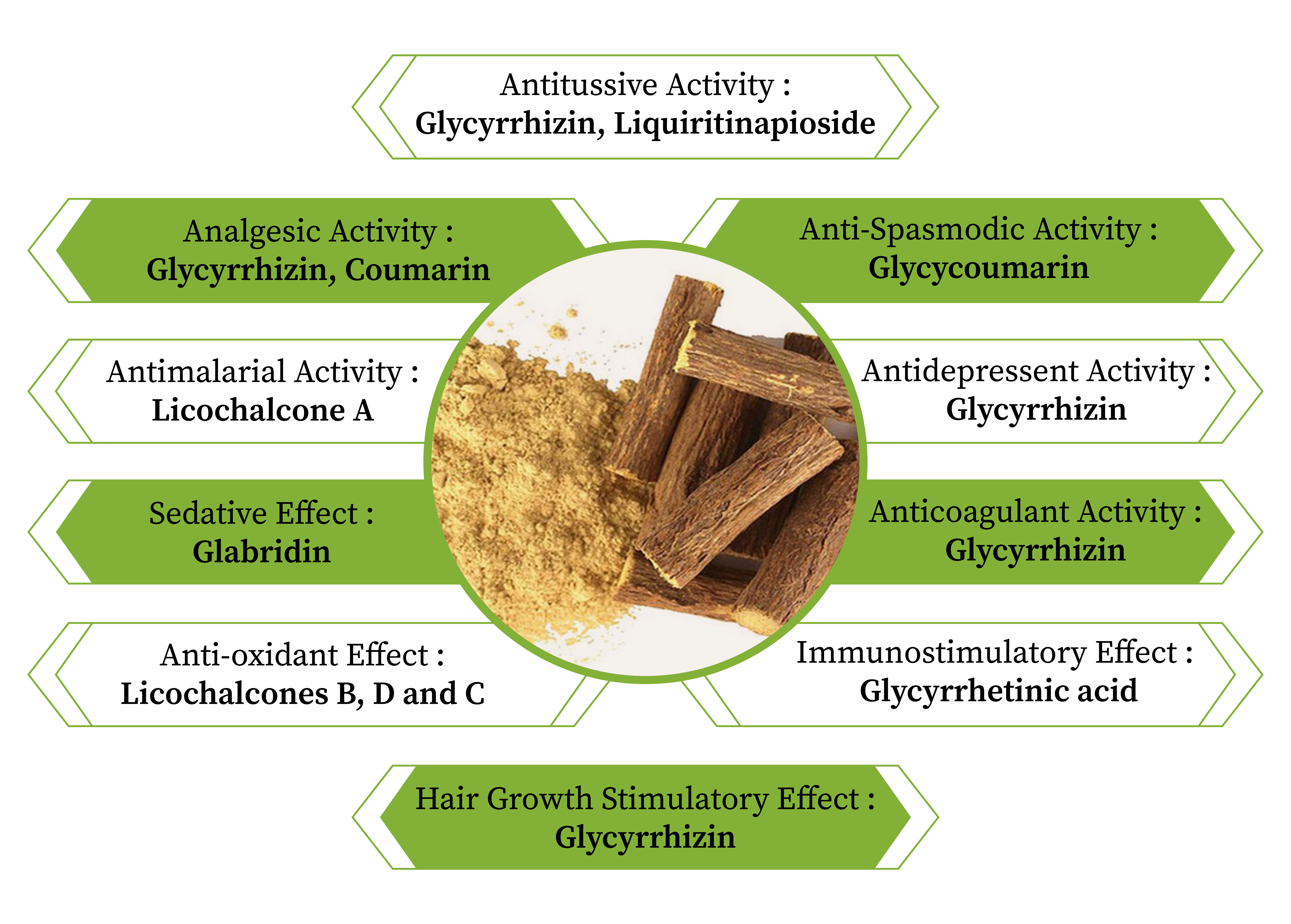
Licorise
Specifications
Botanical Name : Glycyrrhiza glabra
Glycyrrhetinic acid : 20%
Glycyrrhizin : 25%
Glabridine : 60%
Licorise
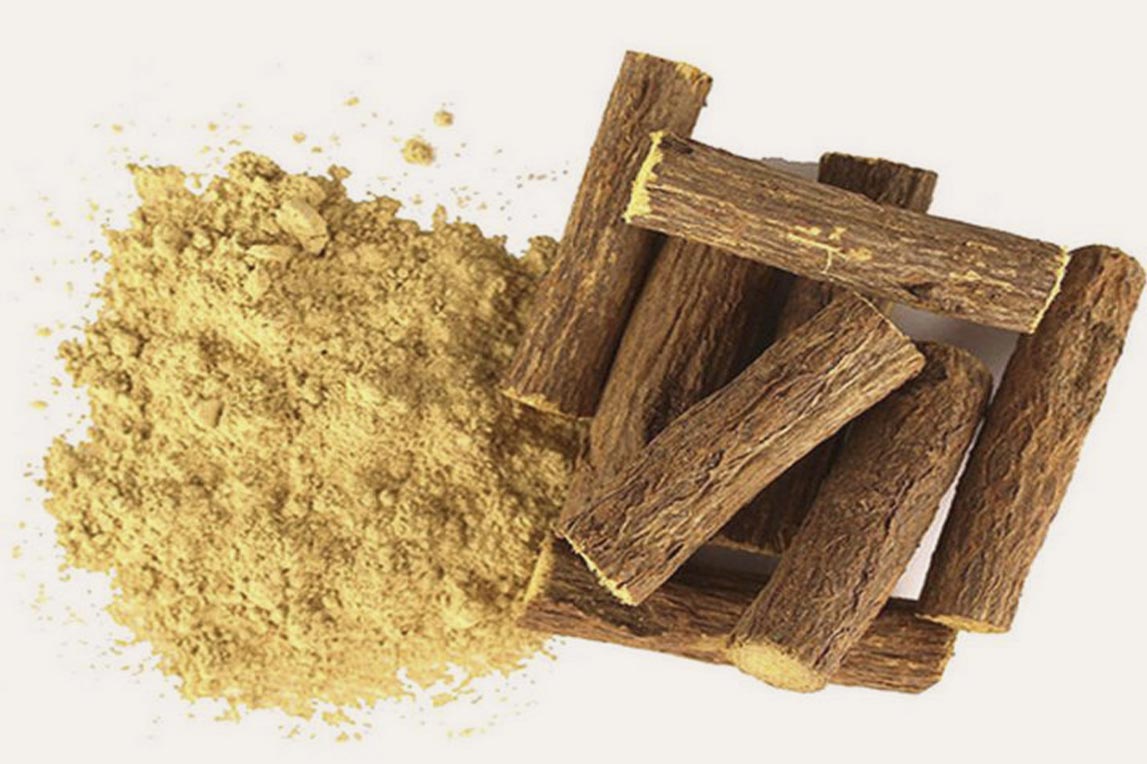
Glycyrrhiza Glabra Linn. belongs to the Fabaceae family and has been recognized since ancient times for its ethnopharmacological values. This plant contains different phytocompounds, such as glycyrrhizin, 18β‐glycyrrhetinic acid, glabrin A and B, and isoflavones, that have demonstrated various pharmacological activities. Pharmacological experiments have demonstrated that different extracts and pure compounds from this species exhibit a broad range of biological properties.
Glycyrrhizin, a triterpenoid saponin that is almost 50 times sweeter than sucrose, being the primary active ingredient. Glabridin is the principal isoflavone identified, ranging between 0.08% and 0.35% of roots' dry weight.
How does it work?
The chemicals contained in Licorise are thought to decrease swelling, thin mucus secretions, decrease cough, and increase the chemicals in our body that heal ulcers.
A number of traditional healers have claimed the efficacy of Glycyrrhiza species for a variety of pathological conditions as a diuretic, choleretic, used as insecticide, and indicated in traditional medicine for coughs, colds, and painful swellings. It contains various biological properties which includes anti-tussive, expectorant, antioxidant, anti-inflammatory, anti-microbial, antiulcer, antiviral, hepatoprotective, neuroprotective.
Benefits of Licorise