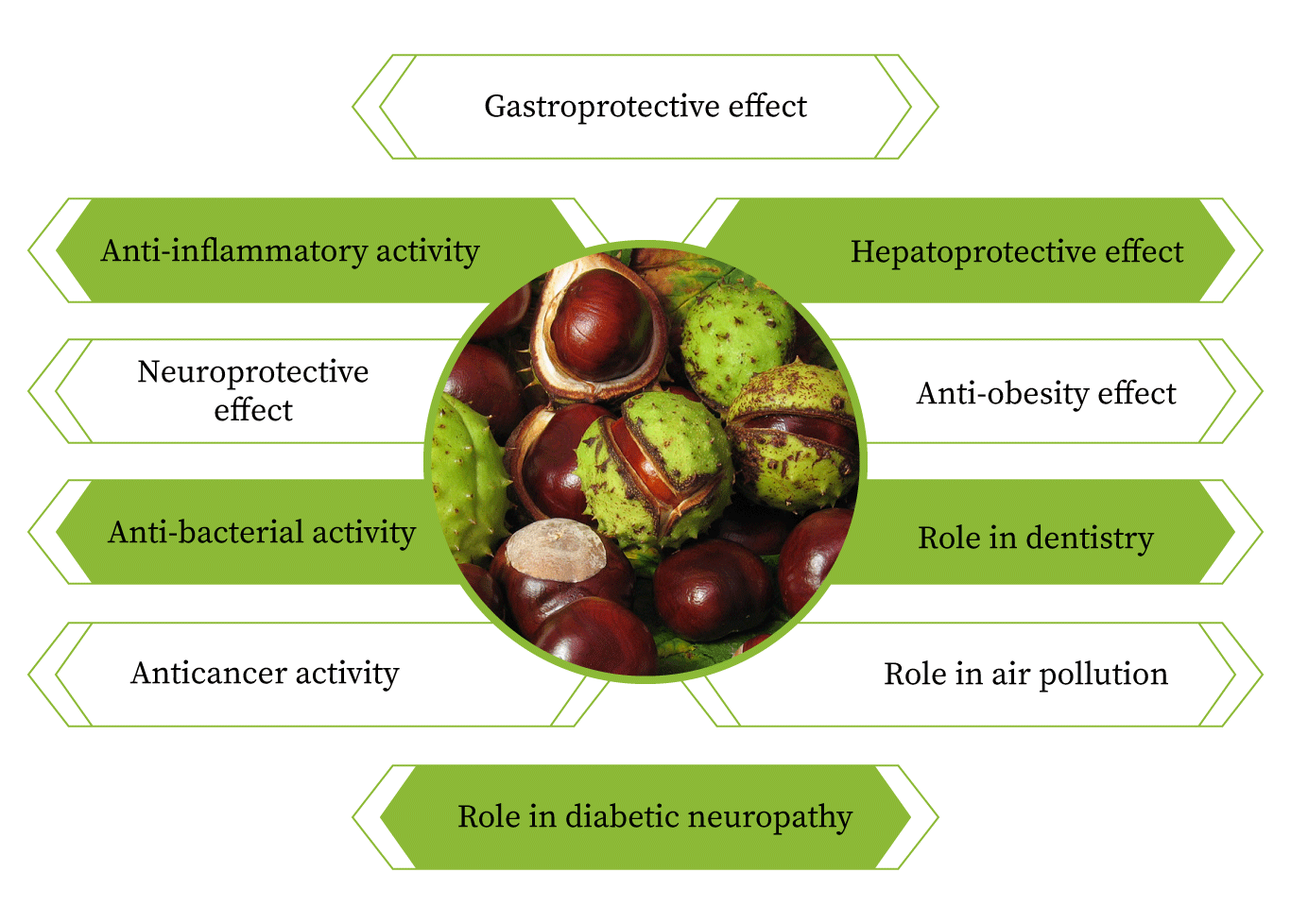
Horse chestnut
Specifications
Botanical Name : Aesculus hippocastanum
β-Escin : 20%, 40%, 95%
Horse Chestnut
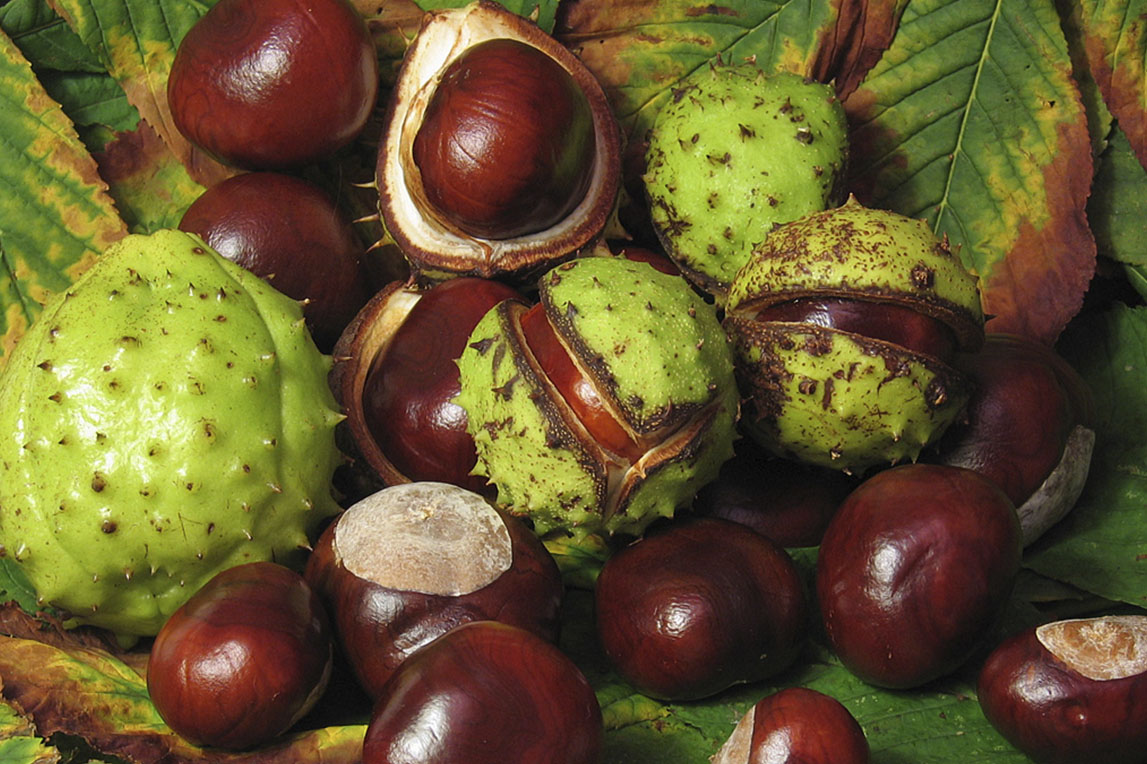
Aesculus Hippocastanum L. Commonly known as Horse Chestnut and Buckeyes, is a rapidly growing ornamental tree belonging to the family Hippocastanaceae and most valuable tree native to the South East Europe. It's seed extracts and their concentrates contain phytocompounds like flavonoids, polyphenols, and triterpenoid saponin glycosides (escin).
β-Escin is a chief bioactive compound of Horse Chestnut seed, which is chemically related to triterpenic glycoside. Seed cotyledons are the main source of escin, but small quantity is also found in leaves, bark and immature fruit pericarp. Escin has different pharmacological activities such as anti-inflammatory, vasoprotective in chronic venous insufficiency.
The plant material is applied, mainly externally (bath infusions, creams, ointments and suppositories), in conditions connected with vascular damage and defective blood clotting, such as venous insufficiency, hemorrhoids, cutaneous capillary fragility, as well as oedemas, small bruises and limited skin and subcutaneous tissue inflammations.
The area of application of that plant material is thus similar to that of Horse Chestnut seeds, whose activity is based on high content of triterpene saponins, mainly escin. Ecsin has shown satisfactory evidence for a clinically significant activity in chronic venous insufficiency (CVI), haemorrhoids and post-operative oedema.
Benefits of Horse Chestnut